
EXPERIENCE OF PREVIOUS FELLOWS
Dr Mike Terreblanche - Edinburgh Arthroplasty Fellow 2023
I was fortunate enough to be offered the opportunity to complete the SAAS Arthroplasty Fellowship at the Royal Infirmary of Edinburgh in Scotland by one of my mentors, and past SAAS president, Dr L Mokete.
I touched down in Edinburgh at the end of January 2023, after completing a year under the guidance and supervision of the arthroplasty unit at Charlotte Maxeke Johannesburg Academic Hospital (Dr L Mokete, Dr N Sikahuli, Dr J Pietrzak & Dr A Sekeitto).
I was soon introduced to the Clinical Director (HOD) of the Orthopaedic Department, Mr. Gavin MacPherson and was told that he would be my supervisor and ‘boss’ for the next 6 months.
Gavin had performed a knee fellowship in Australia soon after he qualified, but had come to prefer and enjoy hip replacement surgery slightly more than knee replacement surgery after returning to Edinburgh after his fellowship.
I learned a great deal from Gavin. He taught me how to perform a fully cemented total hip replacement (cemented femoral fixation and cemented acetabular fixation). He in turn had been shown how to perform this procedure by a Mr. Stefan Breusch who had been Gavin’s mentor and Gavin seemed to have a lot of respect for this man.
This technique (a fully cemented THR) was very new to me, and although it is not part of my current practice, I believe it is a worthwhile experience to learn and witness/observe all sorts of techniques in total joint replacement as one never knows when one might need to utilize certain skills as a bail out or salvage option. It is also good to be able to compare this technique to other methods of achieving fixation of implants to bone so that you can make up your mind as to which one you feel offers the patient the best outcome.
He also taught me how to perform a posterior approach to the hip (the standard surgical approach to the hip in the Edinburgh Arthroplasty Unit), which again was new to me. I have incorporated this into my current practice as I appreciate the exposure and visibility it affords me to implant the prostheses as accurately as possible in my hands.
The practice in Edinburgh was not limited to only performing fully cemented total hip replacements, thankfully. They do perform hybrid fixation (cemented femoral component with uncemented acetabular component) if indicated – mostly for younger or middle-aged patients. I soon learnt that the cemented acetabular components were reserved for elderly patients as they are considerably less expensive than their uncemented counterparts and had a tendency to fail after approximately 10 years or so.
The Edinburgh Arthroplasty Unit is a formidable beast with approximately 10 to 15 orthopaedic surgeons who almost exclusively perform hip and knee arthroplasty apart from one or two surgeons who offer soft tissue hip and knee surgery in addition to their arthroplasty services. This means that every day of the week 2 to 3 surgeons are performing on average 4 total joint replacements per day. This equates to a tremendous wealth of experience in the department, and this experience and knowledge is freely and willingly shared and dispensed at the weekly arthroplasty clinical audit or “M and M” meeting, where the previous week’s cases of each surgeon are presented and discussed. They also have a weekly multi-disciplinary team (MDT) meeting to discuss prosthetic joint infection (PJI) cases with the local microbiologist and infectious diseases physicians. I found these meetings invaluable.
One thing that struck me about these meetings is that the pathology that was being operated on in Edinburgh, much to my surprise, was quite similar to that seen during my experience as registrar and arthroplasty fellow in South Africa. This is because the Covid-19 pandemic coupled with ‘Brexit’ had created large backlogs and long waiting lists and patients were thus having to wait 2 to 3 years before receiving their surgery. This is very similar to our experience in state health care facilities in South Africa.
The Edinburgh Arthroplasty unit exclusively makes use of Stryker implants. This contrasts with my South African experience where I had the freedom and liberty to use whichever implant I felt comfortable using (within reason).
Naturally, this approach or strategy has pros and cons. One of the benefits of this approach is that the unit can amass large amounts of data with the same implant to perform research; and the Edinburgh Arthroplasty Unit has a rich history of producing high quality research. Another benefit is that it also allows one to become comfortable and confident with the same instrumentation and equipment and this translates to efficiency in the operating theatre.
One of the downsides of this approach is that Stryker, because of a lack of competition from other implant manufacturers, could sometimes become a bit complacent and sometimes service delivery would be compromised because of this. This meant that on more than one occasion we were faced with having to make alternative arrangements because of stock unavailability of certain implants. I suppose this offered an opportunity to learn how to adapt and improvise which is always a good skill for any surgeon to have.
My knee replacement surgery experience in Edinburgh was interesting considering that globally, lower limb arthroplasty seems to be heading in the direction of robotic assisted surgery. The Edinburgh arthroplasty unit was not making use of any robotic assistance to perform knee replacement surgeries while I was there and would almost exclusively make use of a mechanical alignment, measured resection technique to perform their knee arthroplasties.
That being said, I was fortunate enough to assist Mr. MacPherson in his private practice during my 6 months under his tutelage. He makes use of robotic assisted surgery with the Mako robot quite frequently in his private practice and this was invaluable for me to observe and learn how robotic assisted surgery with the Mako robot works. It would have been ideal to have learnt how to use the Mako robot myself in the NHS system but naturally this is a more resource constrained environment, and hence we were unable to make use of robotic surgery at the Royal Infirmary of Edinburgh.
My second 6 months were spent under the guidance of Mr. Graham Lawson. Graham is a lovely guy who I enjoyed operating with a great deal. Like most arthroplasty surgeons, he was very meticulous but he had a great love for rugby and most sports and we bonded over this immediately.
Graham performs hip and knee replacement surgery but also performs soft tissue reconstructive knee surgery and it was great for me to attend his clinics for 6 months to learn how to deal with patients with knee complaints of all kinds and across all age groups (and not simply the arthritic knee in the elderly patient).
Other surgeons I learnt a tremendous amount from during my fellowship were Mr. Phil Simpson and Mr. Paul Gaston.
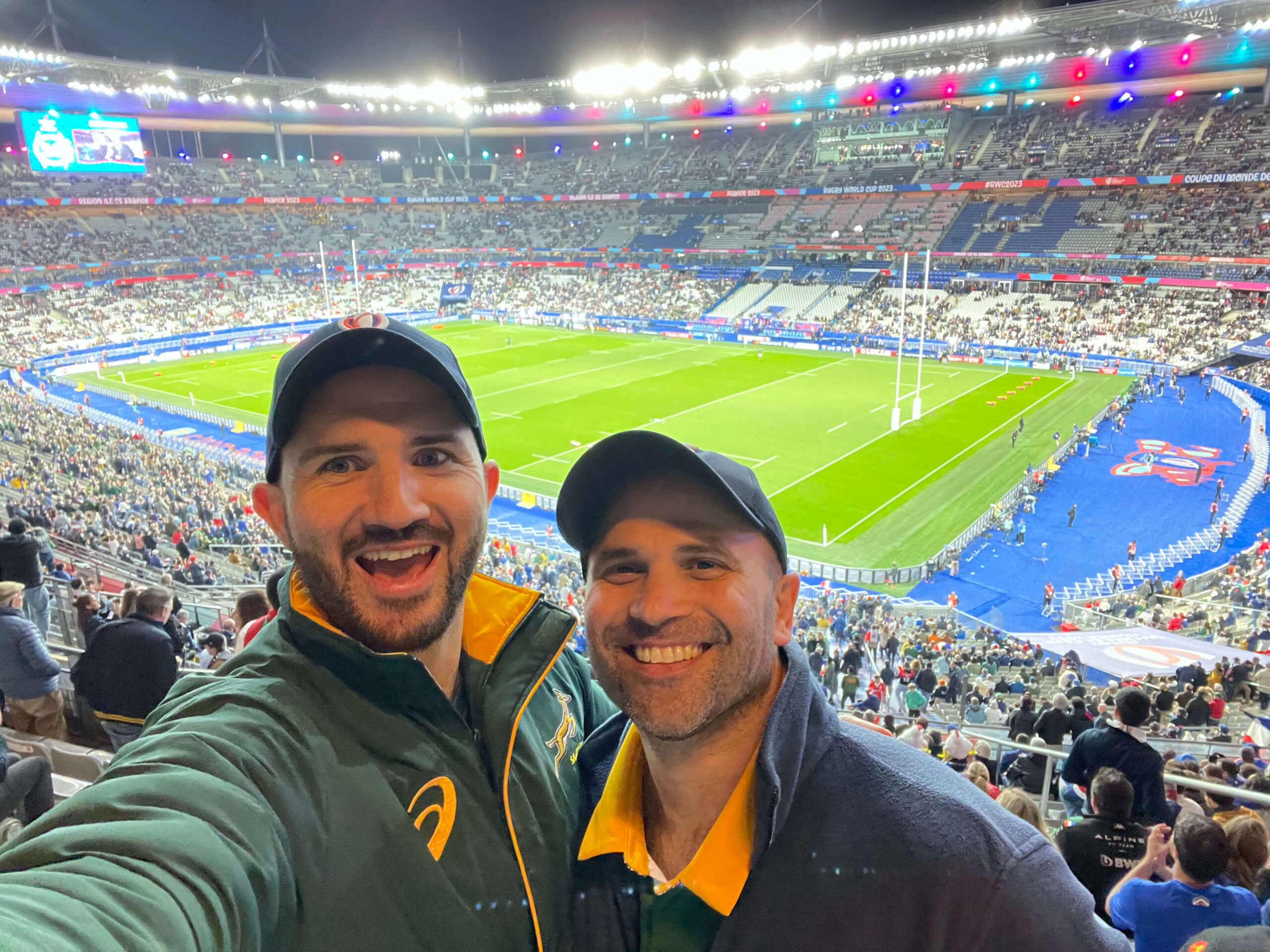
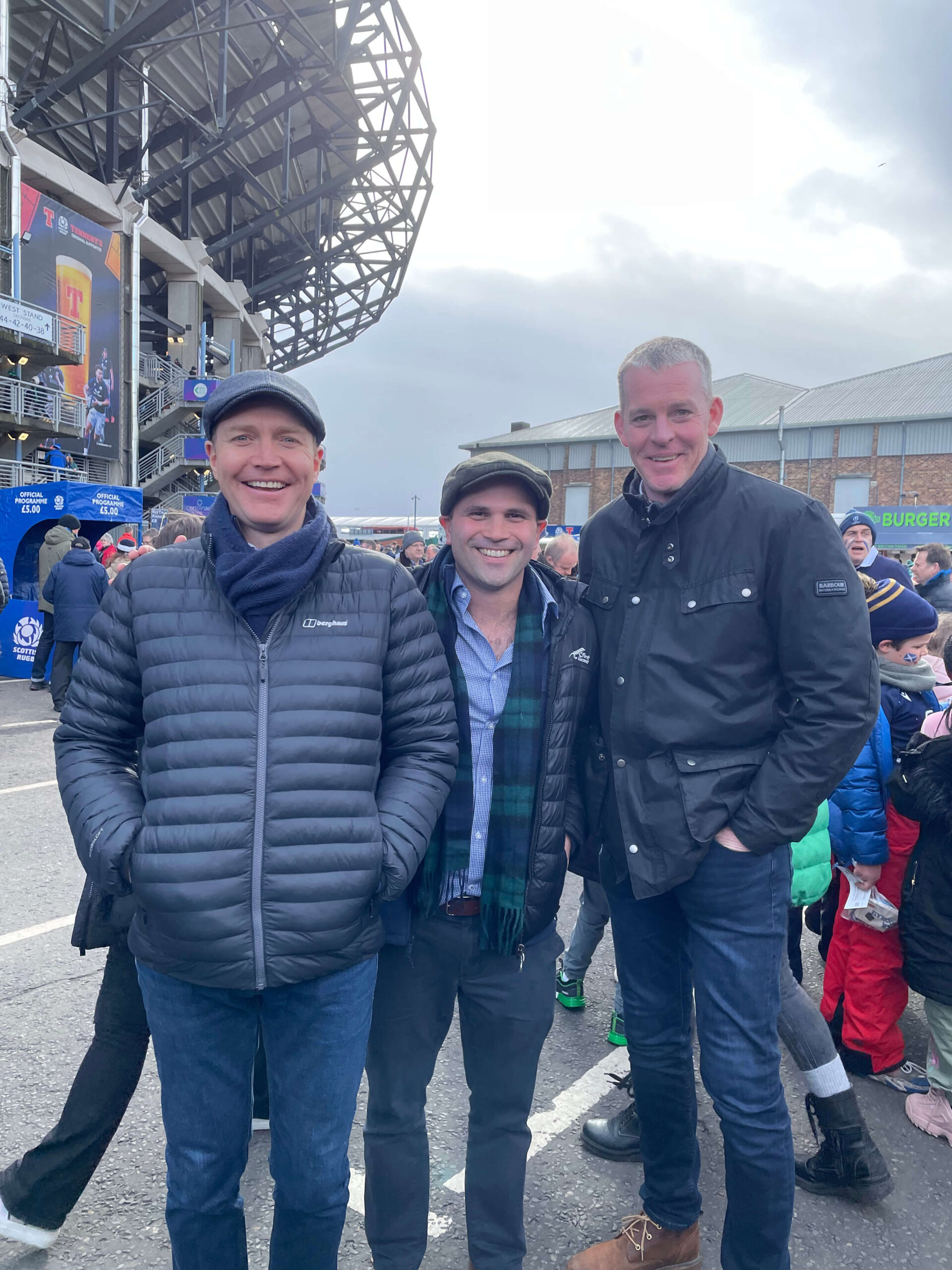
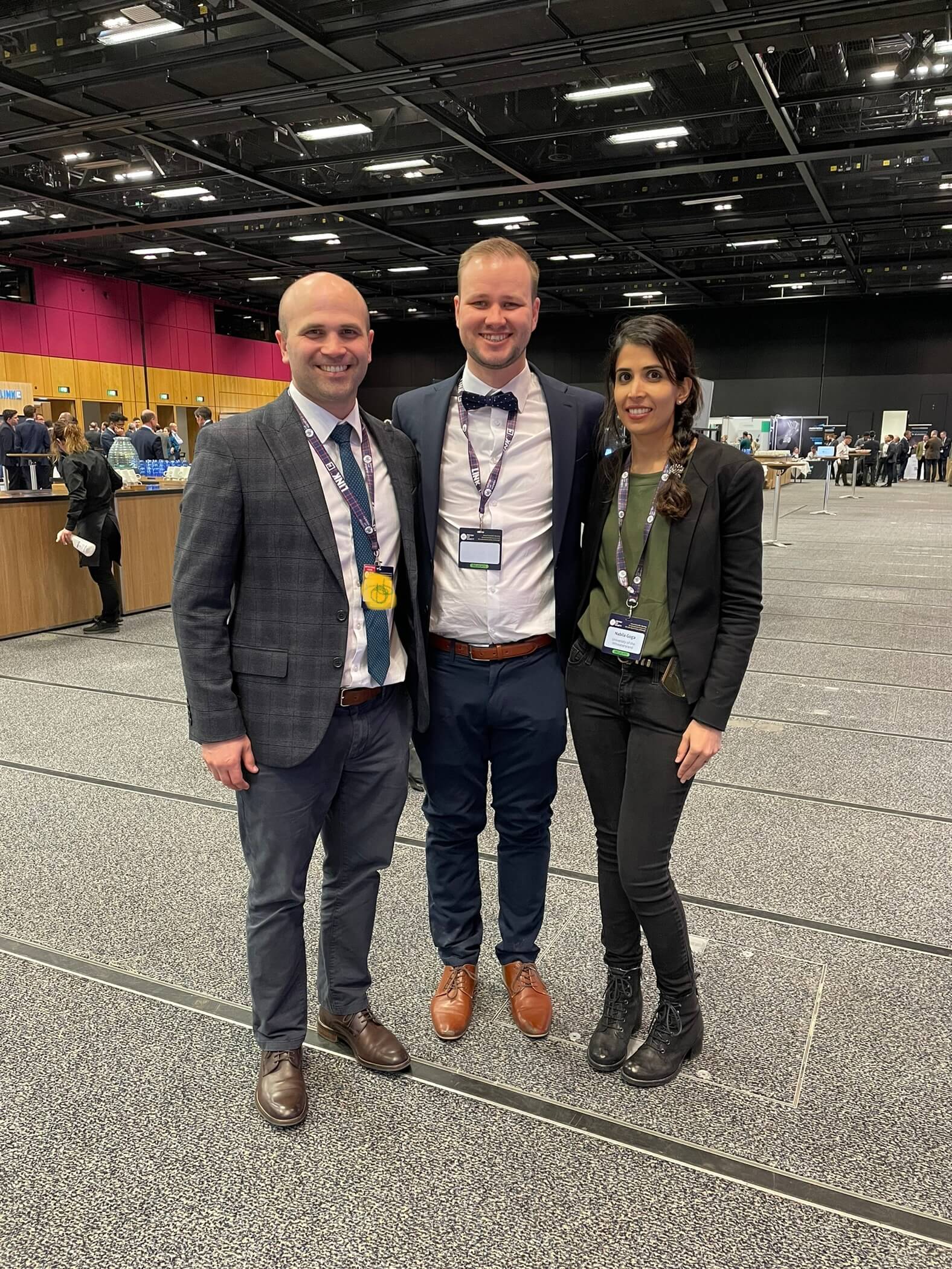
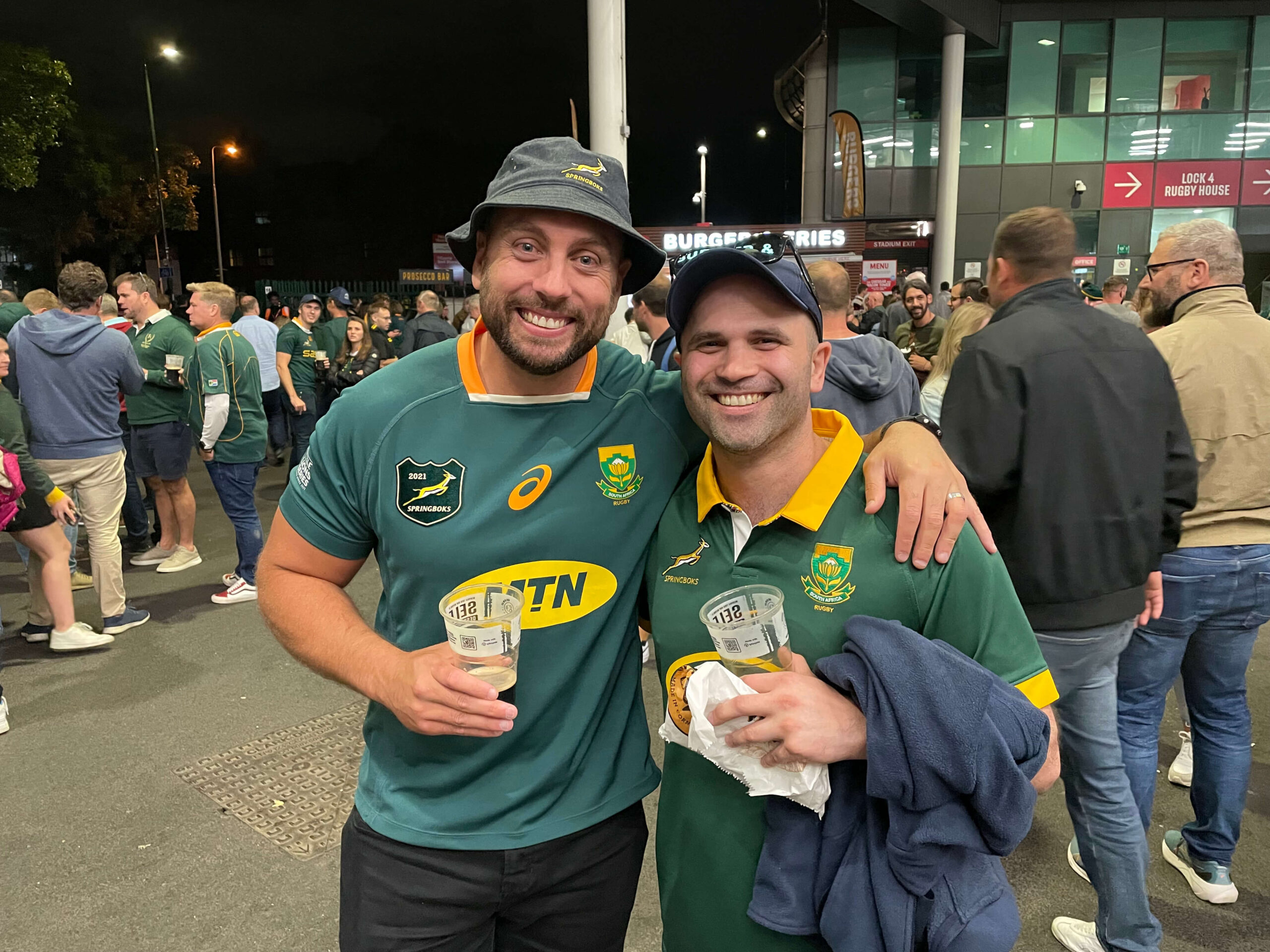
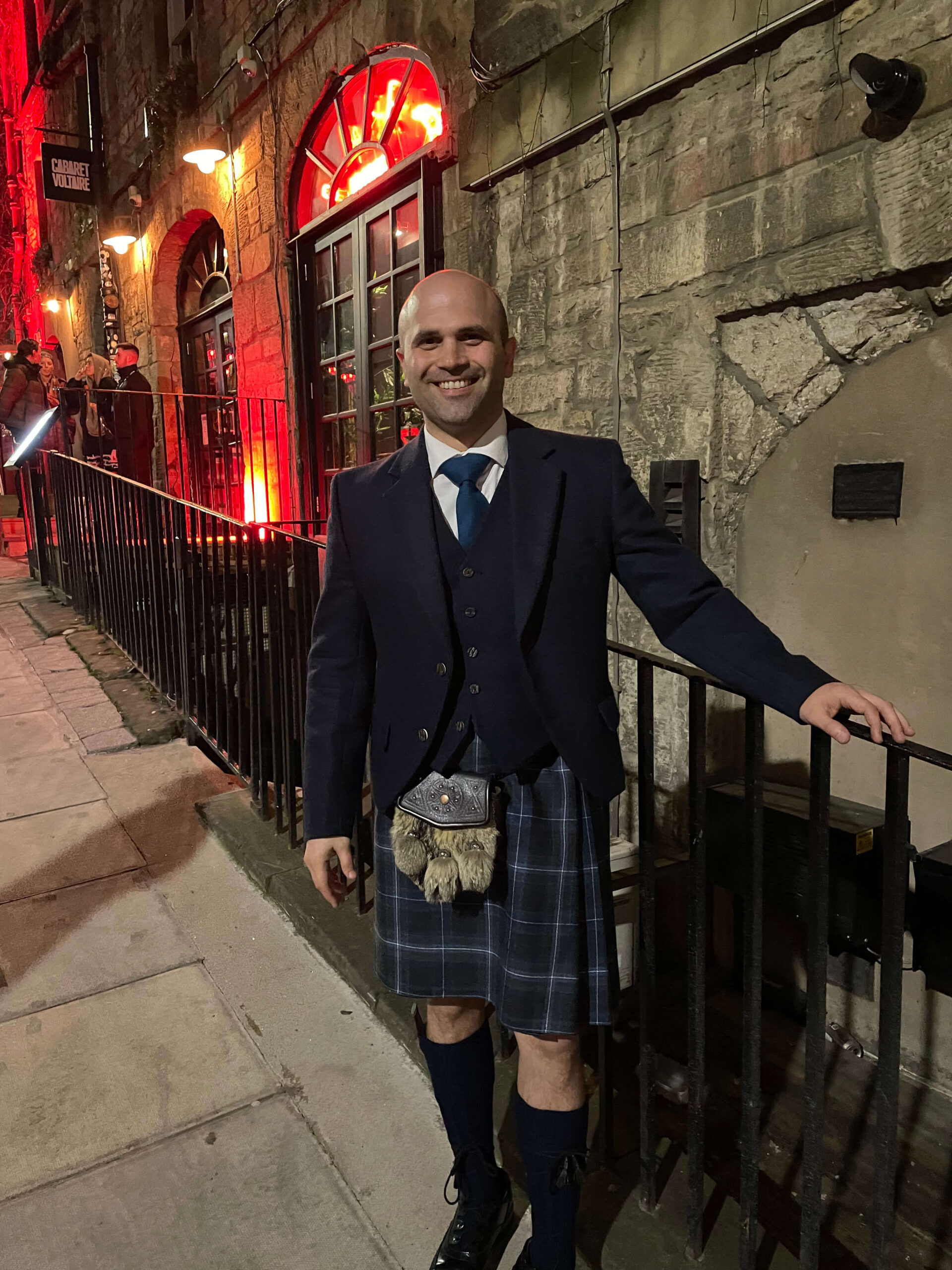
Socially, I enjoyed the opportunity of getting to the famous Murrayfield Stadium in Edinburgh to watch Scotland play Ireland in one of the 6 Nations rugby games which was a great experience (see picture of myself with Mr. Gavin McPherson and Mr. Frazer Wade – another arthroplasty surgeon working at the Royal Infirmary of Edinburgh). I also got down to Twickenham to watch the Springboks beat the All Blacks by a record margin which was one of the highlights of my rugby watching career. I dressed up in a full Scottish Kilt to attend the Royal Infirmary of Edinburgh Arthroplasty Awards Dinner and also attended the British Hip Society Annual Congress with fellow South Africans (Dyllan Geldenhuys and Nabila Goga). I climbed Arthur’s Seat with a fellow South African named Martin who I had met while assisting Mr. MacPherson in the private hospital in Edinburgh. Martin had moved over to the UK to work as a Mako Product Specialist and after hearing his unmistakable accent in theatre we quickly made plans to get together to enjoy a few beers and watch some rugby games together. I managed to get over to Paris to watch the Springboks play in the quarterfinals of the Rugby World Cup against France which was an incredible experience. I also went over to Greece for a summer/beach holiday and went snow skiing in Austria once my Fellowship had concluded. All of these things would have been far more difficult to achieve from South Africa.
Overall, I had a wonderful experience in Edinburgh and learnt a terrific amount. I believe having had some arthroplasty experience in South Africa definitely helped me in Edinburgh as I could expand and build on the limited experience I had developed as a newly qualified orthopaedic surgeon. It also allowed me to contrast and compare techniques we employ over here with techniques they tend to employ over there in the UK.
I would like to extend my most sincere gratitude to the South African Arthroplasty Society (SAAS), and specifically Dr L Mokete, for affording me the opportunity to spend a year in one of the world’s foremost arthroplasty units. I certainly would recommend the fellowship to anyone who is considering a career in lower limb arthroplasty.
Yours sincerely,
Mike Terreblanche
Dr MTN Duma 2022
A year goes by so suddenly! I was extremely lucky to be given the opportunity to go for the Edinburgh Fellowship and it was a great experience. I received the news of the fellowship interview success after a brief time had passed following the departure of my old man. And as if the panic of preparing for living in a foreign country was not enough, we also having delayed expanding our nucleus family for 8 years had that eventually catch up with us…
A special mention of the 2021 SA-Edinburgh fellow (iNdlela ibuzwa kwabaphambili = Cobus ) as he assisted with planning for work and personal life in Edinburgh. Going on fellowship meant I would be leaving my state job and sadly I did not qualify for annual sabbatical leave for my escapade and had to take unpaid leave for the majority of 2022. Travelling with family comes with a lot of feverish excitement. Finding a place to stay, identifying a school for your child, what to do with day to day travel, and of course insecurities around breaking bread against the strength of the pound. Through grace the unimaginable miracles unfolded in spite of our fears. Firstly our Visas were ready a day prior to our booked flight's departure. Accommodation was secured in January, our departure month, thanks to Monu and Kirsten who decided to take their romance a step further and move in together and offered us their splendid place. The school we found was 300 meters from the flat, “Bruntsfield Primary School” which turned out to have such a profound history and gave our daughter a warm reception as well as pen pals {watsapp pals} she keeps up with to date. In summary her year went the fastest!
My wife had an eye for which places to visit and we visited a number of castles, did a number of hikes in and around Edinburgh as well as in Glasgow. Our favourite town to escape to quickly became North Berwick, a place I would recommend to Fellows with families. Our family of 3 with one pregnancy grew into a family of five in May of “22.
Day to day travel was made pleasant by the efficient bus system on the colder days, My bicycle on the not so cold days, and the “Cobus wheels” Honda Jazz on the “further travel” days.
The Royal Infirmary of Edinburgh is a renowned centre the world over and being part of the staff can be overwhelming, but fortunately the orthopaedic department was welcoming and supportive in many respects. I spent half the year with Mr Ahmed (hip; knee; Peads ortho) as well as Mr Clement (knee; hip; research) and the other half with Mr Goudie (took over Prof Howie’s list = hip; knee; Revisions). I was fortunate in that the covid restrictions were getting more and more eased which meant elective work was being less restricted, but the downside to this was that the trainees were also quite eager to rotate with some of the in-house (senior surgeon) favourites to catch up for the prior {slow covid} years. What was great however was the ability to have access to the other surgeons' lists on the days when our team was less busy. On those days one could access the sports lists {hip and knee arthroscopy exposure}; Murrayfield private hospital {Mako robotic exposure; paid assistance lists = stipend top ups}.
All in all Edinburgh was an experience I would do all over again!….after all it contributed to the front-page!


Dr Cobus Erasmus 2021
The SAAS Edinburgh Arthroplasty Fellowship Experience of Dr Cobus Erasmus (2021)
After passing my final exams in the first semester of 2020, I was not completely sure in which direction I wanted to steer my career long term. It was during this time that I saw the advertisement for the SAAS Arthroplasty Fellowship in Edinburgh, Scotland. Arthroplasty was my favourite sub-discipline and Scotland had always held a romantic appeal, conjuring up images of remote castles, rustic pubs, colourful kilts, and majestic natural scenery. I applied for the fellowship and two weeks later I received the news that I would be spending 2021 in Scotland. I was elated and the rest of the year went by quickly, tending to all the preparations, applications, visas, and registrations that had to be done.
My wife and I arrived in a cold, dark Edinburgh in full Covid-19 lockdown-mode in the middle of January 2021. After completing our mandatory ten-day self-isolation (which included sleeping under our coats on a bare matrass for the first four nights as most shops were closed and we couldn’t find anywhere to buy blankets), we were greeted by a winter wonderland as we stepped out of our apartment for the first time. Edinburgh had heavy snowfall during our first week out, and people were skiing and snowboarding down Arthur’s Seat, the iconic hill just behind our flat. It was a fantastic sight, and we were lucky to see it, as it doesn’t usually snow this heavily in Edinburgh.
I started work at the Royal Infirmary of Edinburgh shortly after this. I was allocated to work with Mr Phil Simpson for the first six months. I was happy to find that he is an excellent teacher, taking his time to show me everything from suture techniques to soft tissue handling and the full spectrum of primary and revision arthroplasty. Mr Simpson is very experienced with robotic-assisted joint replacements and I had the opportunity to observe and assist with total knee, partial knee and hip replacements with the MAKO system on his theatre lists at the Spire Murrayfield private hospital. He had a revision-heavy practice, and I got a lot of exposure to handling periprosthetic joint infections as well as revising hip and knee replacements for a variety of other reasons. Mr Simpson had much insight into how to run a successful private practice and I gained a wealth of knowledge that helped me set up my own practice.
The second six months of my time in Edinburgh, I continued working with Mr Phil Simpson but was also allocated to work with Mr Paul Gaston. Mr Gaston is the Royal Infirmary’s resident hip guru, performing almost exclusively primary and revision hip arthroplasty, and hip arthroscopy. Mr Gaston was a great teacher and very meticulous in everything he did. I enjoyed our discussions about all things arthroplasty related (and not) and he taught me a lot about the finer nuances of hip examination and hip surgery. I saw very interesting hip pathology while working with Mr Gaston and picked up many tricks and techniques on diagnosing and handling the less common and more subtle hip pathologies.
During my year there, I had the opportunity to work with ten different arthroplasty surgeons. This was extremely valuable to me, as I got to work with a range of very experienced surgeons, all with their own unique techniques and knowledge to impart.
There were plenty of opportunities for research during the year, and I gained a deeper understanding of statistics, gathering data and how to write interesting articles from the multitude of publishing powerhouses at the Royal Infirmary. I got one article published in an international journal, had a poster displayed at the British Hip Society’s annual meeting and presented research done during my fellowship at two congresses in South Africa the following year.
Edinburgh is a fantastic city to live in for a year, with great places to eat, amazing history all around, beautiful architecture and a never-ending supply of alleyways, hills, parks, and pubs to explore. It also served as a great base from which to travel to the rest of Scotland, Wales, and England. Ireland is just a short ferry ride away and well worth visiting.
Scotland is well-known as paradise for whiskey lovers. You can visit a new distillery every weekend and run out of time before you run out of distilleries to see. The pubs in Edinburgh are very cosy and made for a great place to meet up after work with the other fellows for a pint. There are an excellent variety of restaurants to choose from (including several Michelin star restaurants). Your time in Scotland won’t be complete without trying haggis, Lorne sausage, black pudding, bacon rolls for breakfast and brown sauce with your fish and chips. The Scottish are keen rugby supporters, and one of the highlights of our year was attending the Springboks vs Scotland game at the Murrayfield stadium. It was quite amusing to see the large number of confused fans wearing both Springbok jerseys and kilts.
One of our best summer trips included visiting Glen Coe, climbing Ben Nevis, wild camping, visiting the Isle of Skye and then navigating the epic North Coast 500 route – this was Scotland at its most rugged and remote best.
We ended the year with a lovely Christmas dinner at Mr Simpson’s house, saw a great performance of The Nutcracker, enjoyed the Christmas lights and market and, to end it all on a high note, were chased by an irate coo (native Scottish cow) while doing a last bit of hill walking in the Pentlands.
The fellowship and the time spent in Edinburgh was wonderful and I made many great friends and memories. I give it 10/10 stars – highly recommended.


